A memorial TO HONOR THE 18 million civilian WOMEN WHO worked on the home front during wwii.
HELP BUILD THE MEMORIAL
CONGRESS HAS AUTHORIZED THE MEMORIAL. BIPARTISAN LEGISLATION IS MOVING TO PLACE IT ON THE NATIONAL MALL. DONATIONS WILL BUILD IT.
The memorial will be funded using entirely private donations. Please join the “we can do it!” efforts.
Even the smallest donations make an impact.
Raya Kenney, founder, speaking at the Congressional Gold Medal Ceremony Reception Honoring the Rosies.
April 10th, 2024
At just 17, Mae left home for the first time, traveling across the country to Seattle to work at Boeing. Every rivet she drove into a bomber was more than a job, it was a step into the unknown; a young woman helping shape the outcome of a world at war. Her courage and determination helped build planes, break barriers, and leave a lasting legacy.
World War II reshaped the lives of two young sisters from Mission Hill, drawing them into the iconic workforce of women known as “Rosie the Riveter.”
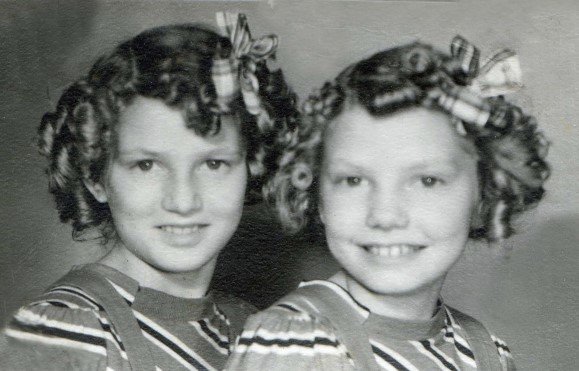
Lorraine and Evangeline “Sis” Hauger put their high school educations on pause and, in January 1943, joined the National Youth Administration (NYA). There, they trained in defense-related work to contribute to the wartime effort.
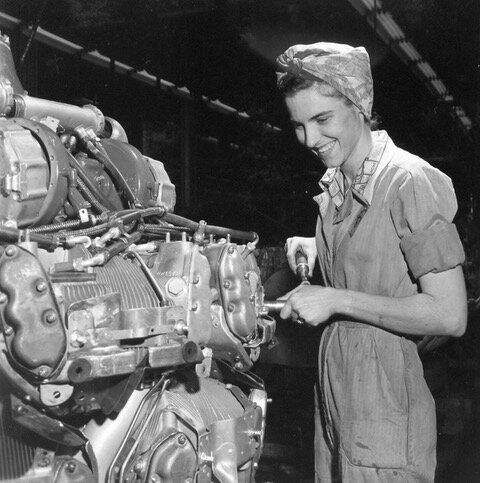
Milka Bamond served as a Rosie in Detroit, where she worked at Briggs & Stratton. During the war, the plant was converted from manufacturing small engines, to building wingtips and tails for B-17s.
The child of an immigrant coal miner, Milka credits her service as a Rosie to her realization of the American Dream.
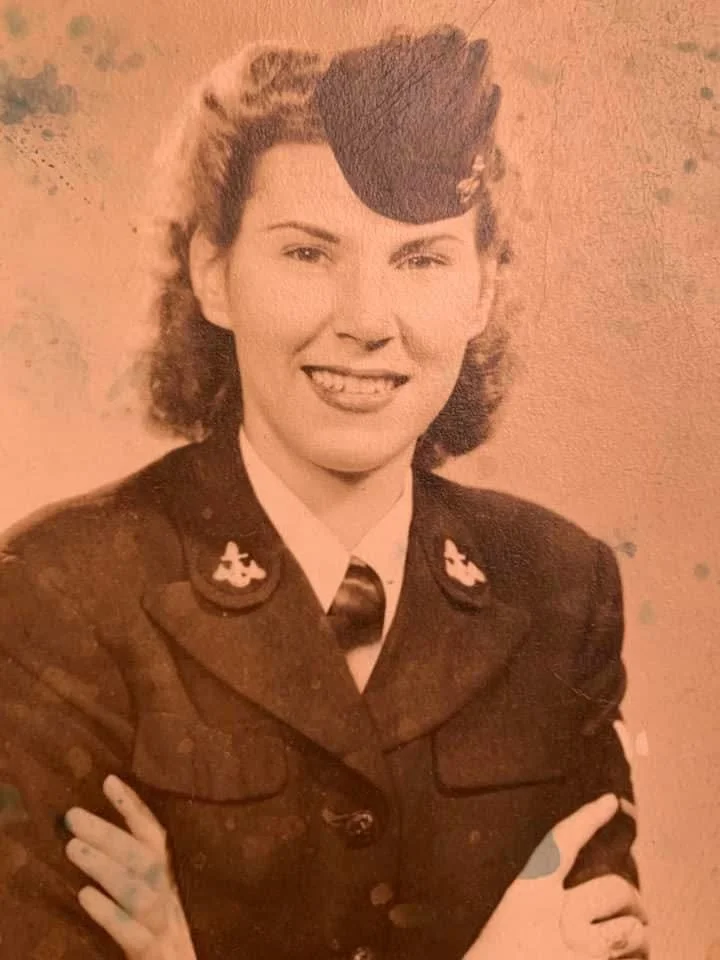
…Even when she surpassed 100 years old, she had the comportment of someone much younger. Born in Switzerland, she was a proud veteran of the US Navy. As a WAVE (Women Accepted for Volunteer Emergency Service), she served as a medical technician at the San Diego Naval Medical Center treating wounded sailors during World War II from 1944 to 1946.
In 1943, my mother, Helen Wick, quit her job teaching Kindergarten in Iowa and moved to Los Angeles with a friend to help the war effort. They heard that Douglas Aircraft was hiring, so they applied and were given aptitude tests. Mother scored very high on writing skills, so she was placed in the time office and given operational manuals to proofread.
Mother traveled to Battle Creek, MI, by train when my father was in basic training at Fort Custer in 1942. While there, she worked on the assembly line packing K rations at The Kellogg Company and lived with a local couple.
When his company transferred to Wilmington, CA, for further training as a military police unit, Mother traveled there by train and worked at California Shipbuilding Company first as a welder and then in the office.
My mother Helen (nee Joiner) Beaudet was a proud "Rosie" at the Dodge Chicago Plant from 1943-1945. Mom was born in Chicago in 1923 but became a ward of the state when her mother died in childbirth when mom was only two years old. She spent her childhood in an orphanage. Mom was 18 when the U.S. entered the war and was eager to do her part, including doing work that could be hard and dangerous.
Helen Marie Janning Guthrie worked the family farm in Western Oklahoma to provide wheat for the troops in World War II.
Born in 1930 and living through the Dust Bowl and helping her father FR Janning work the farm, she became a much more important contributor when her three brothers went to War. When her brother Tex was called to War just before Christmas, she asked her mother, “What are we going to do?’ Her mother responded,” We are going to have Christmas.”
“My four brothers are in service. I want to do as much as I can to see that plenty of ammunition and supplies reach them.”
During my 18th summer I traveled from our farm in Iowa to see my fiancé, Dave on his first leave in Minneapolis from the Navy May 18-26, in 1943, and decided to stay. My sister, Leota and her husband, Del, lived there and were happy to have me stay at their home at 3216 Hennepin Avenue.
Mom and Auntie were surprised to hear that their childhood efforts qualify them as Rosies. “We were just doing our part, nothing special…” and yet we all know how theirs and the hands of many children made a big difference. “We Can Do It!” And they sure did.
Evie worked with her dad in his plumbing business and donated many evenings at Port Huron Hospital.
She never saw her contribution to the home front as anything special. That’s the thing about her generation. They were willing to step up and do what needed to be done.
Rose and her friend Laura went on to work as a team at Vega, the Lockheed Aircraft parts division, in Burbank. Rose worked there from 1942 until World War II ended. In their production team, Rose was indeed the riveter, and Laura would assist her in the process with the parts as the “bucker”.
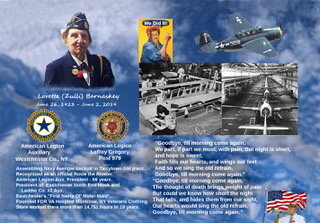
Loretta worked at the General Motor plant in Tarrytown for three years, working to assemble the cockpit of the Navy’s Avenger fighter plane. It was this experience where she received the title of Rosie the Riveter. She prided herself on this achievement and is recognized as an official Rosie the Riveter.
I walked right in lockstep behind my lead man, and every time he’d point to something, I’d say, “ I can do that!” Finally he said, “Well, do it!”
While the full extent of what Eliza worked on during the war is unknown, she worked on P-47 fighter parts and later worked on the bell helicopters used in Korea.
Upon greeting these two young women, the crop farmer, Guy Smith, scratched his head as to how these two small, scrawny, females were going to work out! But they did and won the farmer over with their efforts! It was quite an experience and while it was very different from what they were accustomed to, they had the time of their lives, working hard, distracting themselves from missing their husbands.
While at Willow Run, Laura was promoted to machine press operator, a position she held when Ford asked her to stay on with the company after the war was over in 1945.
I was 23 in 1944 and was trained to install machine gunsights inside the ball turret of the planes. It was quite an experience being just one of the thousands who worked at the B-29 plant — along with many whose loved ones would be killed in action.
She became visibly proud to report that her boss at Consolidated refused to even provide her a drafting table or chair in the beginning. She said that she knew she had done well the morning she came to work to find her own chair and drafting table.
Betty loved her job as an aircraft mechanic and has always been proud of her work in the war effort.
Corrine Schlom entered the Cadet Nursing Program in 1944, as part of the Bolton Act of 1943 to call up nurses for national service during WWII.
She had the opportunity to attend Smith College for two years. After her sophomore year, she left college to work in a factory, painting aircraft nose cones.
I am very proud of my “Rosie the Riveter”; I miss her every day. She was just as much of a war hero as my father.
Eisenhower himself said, “The contribution of the women of America, whether on the farm or in the factory or in uniform, to D-Day was a sine qua non [or necessary for]…the invasion effort.”
OTHER WAYS TO DONATE
DOUBLE YOUR DONATIONS WITH WORKPLACE GIVING PROGRAMS!
***
If you’d like, after your donation, email us with the name of who you would like to donate in honor of and we will add her name to our website under, “Stories, In Honor of...”.
We are a non-profit, 501(c)(3) foundation.
All funding for this commemorative work must be raised using private donations to the foundation; no government funds may be used (Commemorative Works Act).